The Education Leader Preparing Saudi Arabia for an AI Future

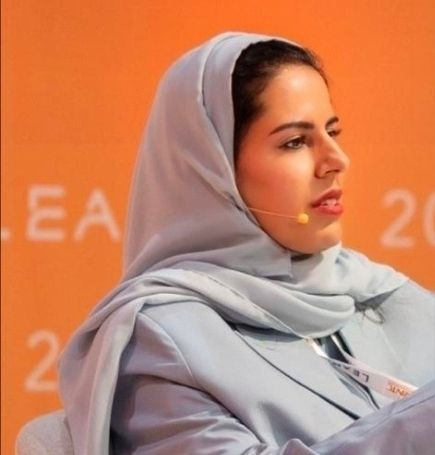
Dr. Husa Alangari is a Saudi education and technology leader whose career spans teaching, academic research and executive leadership, with a focus on AI adoption and workforce development.

When Dr. Husa Alangari introduced computers into an English classroom at a Saudi public school in 2001, she saw an opportunity to change how students learned. But the experience also revealed a challenge. Introducing technology was only the beginning. Teachers needed training, institutions needed support, and new approaches had to continue beyond the initial initiative.
That experience helped shape the direction of her career. Today, Husa works at the intersection of education, technology and human capability, focusing on how people and organisations can prepare for a future increasingly shaped by artificial intelligence.
Her professional journey began in English-language education. After earning a bachelor's degree in English Literature, she pursued advanced studies in instructional systems technology at Indiana University Bloomington, completing her master's degree in 2011 and her PhD in 2019.
The field examines how learning experiences can be designed, delivered and improved. For Husa, it provided a foundation for understanding the relationship between technology, teaching methods and the systems that support learning.
She later joined Princess Nourah bint Abdulrahman University, where her work included teaching, academic research, faculty development and digital learning. Her interests extended beyond introducing new tools into classrooms. She explored how educators could use technology effectively and how universities could respond to changing educational and employment needs.
Artificial intelligence has since become a central part of that conversation. Husa's research and thought leadership examine its potential in higher education, alongside the importance of responsible implementation. Her published work includes a chapter on artificial intelligence in higher education and another on micro-credentials, which offer focused ways for learners to develop and demonstrate specific skills.
In 2025, she moved into executive leadership as CEO for Saudi Arabia at Ultimate Learning Academy, a regional education technology company. The role brought her academic experience into a business environment, with responsibilities spanning strategy, partnerships, governance and the development of learning solutions.
Her work also connects with Saudi Arabia's broader ambitions around digital transformation and Vision 2030. As AI becomes more widely adopted across industries, education systems and employers face the challenge of preparing people to work with new technologies.
For Husa, that preparation requires more than access to digital tools. Educators need practical training, learners need relevant skills, and organisations need the structures to support lasting change. Her approach places human capability alongside technological progress.
Her professional recognition includes selection as a 2024 EDSAFE AI Alliance Women in AI Fellow, a programme focused on women working across artificial intelligence, education, safety and policy.

Across teaching, research and executive leadership, one theme connects Husa's work: technology creates value when people are prepared to use it. It is a perspective that began with a classroom experience and has since expanded into questions about education systems, organisational readiness and the future of work.
As Saudi Arabia continues to invest in technology and digital skills, Husa's work sits at an important intersection. Her focus is not only on what AI can do, but on how educators, learners and institutions can make it useful in practice.
For her, preparing for an AI-driven future begins with investing in the people who will shape it.
Comments